The subject
About Harlech Castle
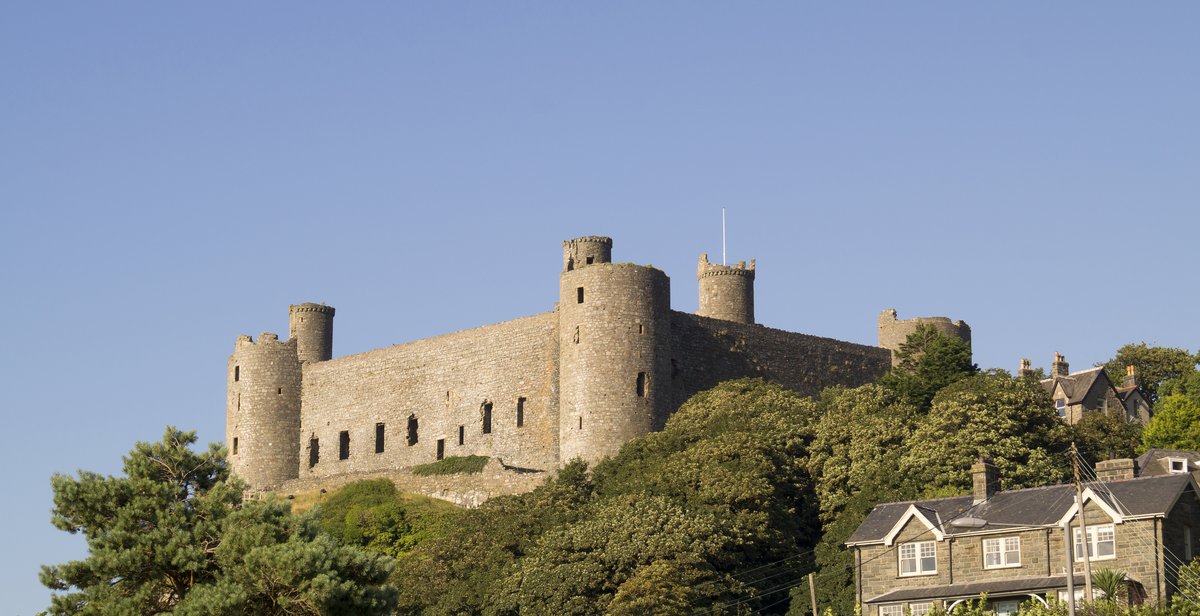
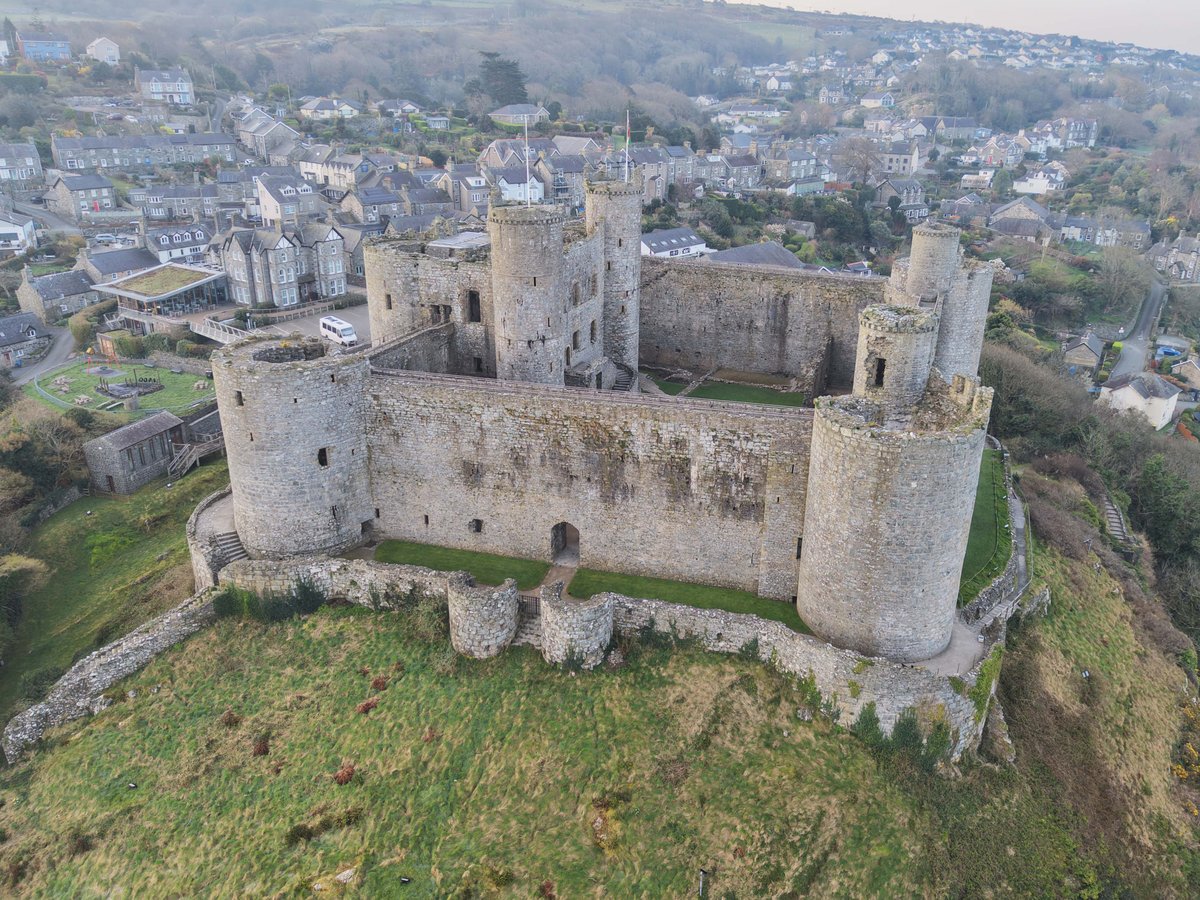
Harlech Castle stands on a grey crag on the coast of North Wales — a great square fortress that looks as though it grew straight out of the rock.
It was built by King Edward I between 1282 and 1289, during the campaign that conquered Wales, and it was one of a chain of strongholds — the “Iron Ring” — thrown around the north to hold the country down. Its master mason was James of St George, a military engineer from Savoy who gave Edward some of the finest castles in Europe.
Harlech is a concentric castle: a lower ring of walls set inside a higher one, so that defenders could shoot over the heads of those below — a castle within a castle. Its most famous feature ran down the seaward side: a fortified stairway of 127 steps to a water-gate, so that when the tide reached the rock the garrison could be supplied by ship. The sea has since drawn back, and the castle now looks out over green fields and dunes.
For a fortress meant to overawe the Welsh, Harlech has a very Welsh history. In 1404 Owain Glyndŵr took it and made it the headquarters of his rebellion, and briefly a Welsh capital. Later, in the Wars of the Roses, its garrison held out for seven years — the longest siege in British history — before surrendering in 1468. That defiance is said to have given the country its marching song, “Men of Harlech”.
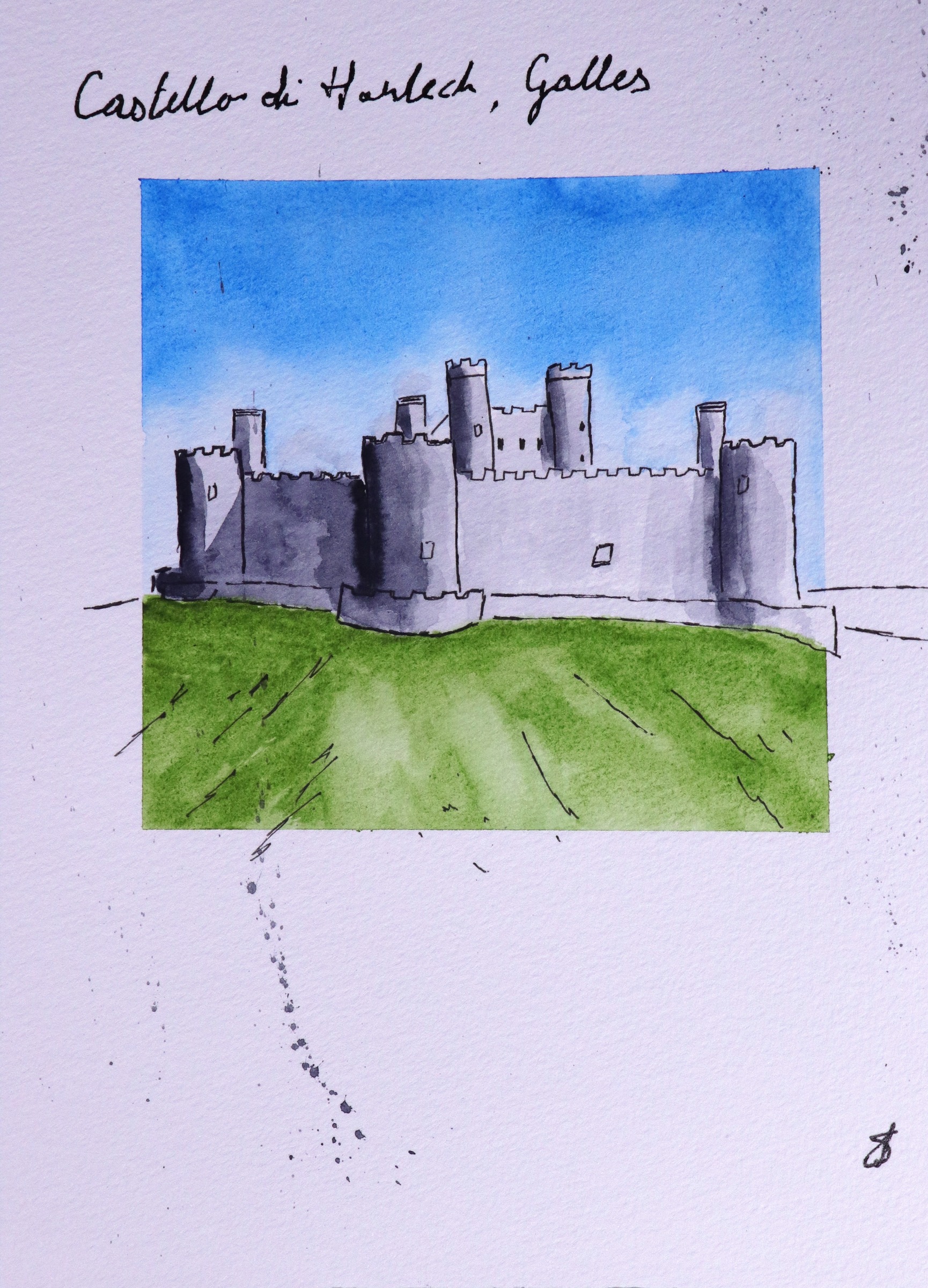
So I drew it loosely: the ink finds the towers and battlements, then leaves the crag half-suggested, so that castle and rock run together into one form. A wash of blue for the sky, green for the hillside below, and a single splash of red — the colour of the Welsh dragon — set off to the side.
In 1986 Harlech, with Edward’s other great Welsh castles, was made a UNESCO World Heritage Site — among “the finest examples of late 13th-century military architecture in Europe”. It has stood as a ruin for centuries, and it is still magnificent.
See also · Castles Sketchbook
Caernarfon Castle ·
Conwy Castle ·
Windsor Castle