The subject
About Caernarfon Castle
Caernarfon is the grandest and strangest of Edward I’s Welsh castles — a fortress built to look like an empire.
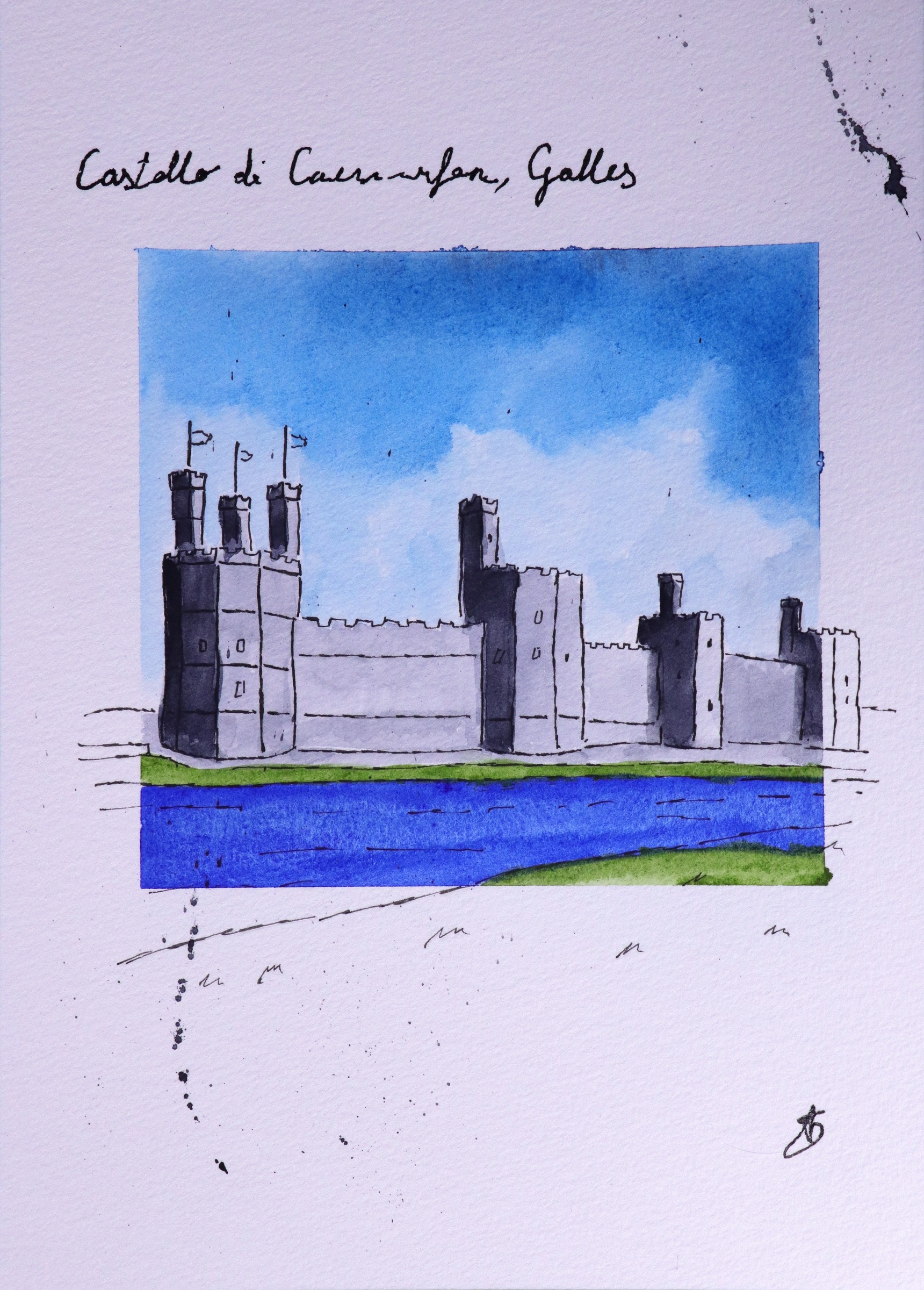
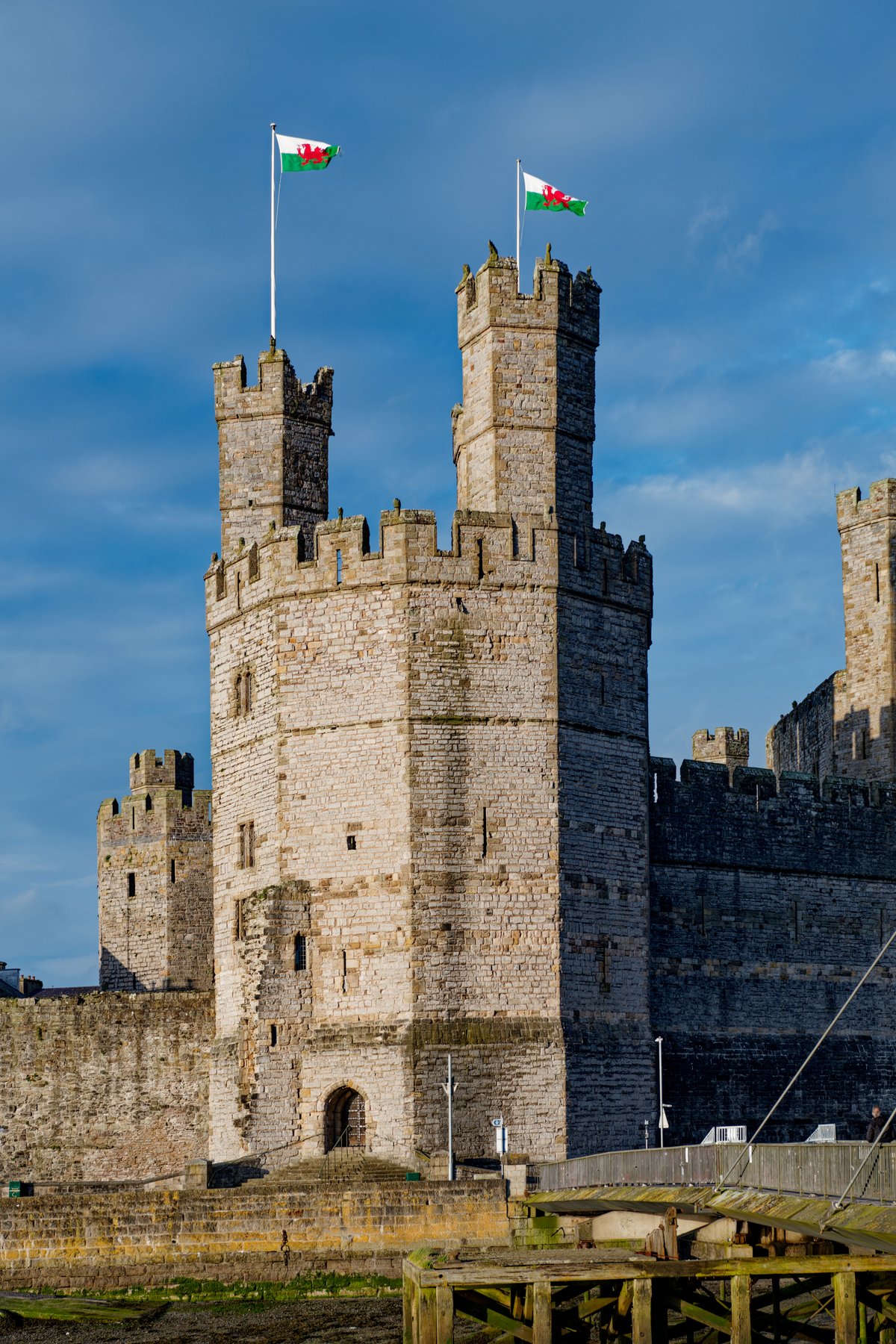
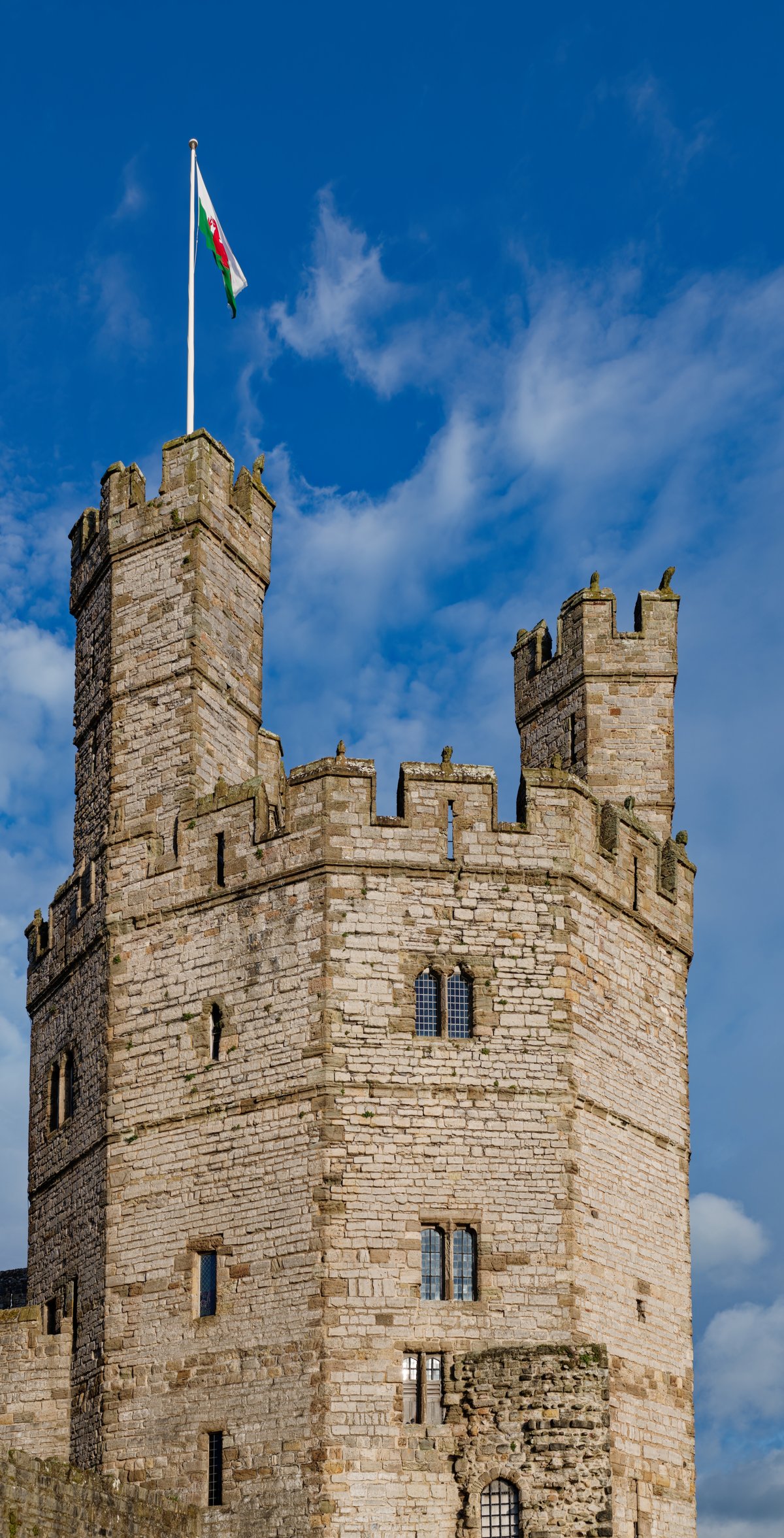
Edward began it in 1283, at the height of his conquest of Wales, and spent a fortune on it, far more than on any of his other castles. Where Harlech and the rest have plain round towers, Caernarfon’s are polygonal, faceted like great crystals, and its walls are laid in bands of different-coloured stone. This was not decoration: Edward was quoting the ancient walls of Constantinople, the imperial city, to say that his power here was Roman — and permanent.
The choice was deliberate and layered. The castle stands on the site of the Roman fort of Segontium; a Welsh legend told that the emperor Magnus Maximus had dreamed of a great walled city at a river-mouth here, and Edward leaned into the tale, styling his stronghold as the heir of Rome. It is architecture as propaganda — a conqueror dressing his castle in the borrowed authority of an empire.
It was here, in April 1284, that Edward’s son was born — the future Edward II, made Prince of Wales. A famous legend, first told three centuries later, has Edward promising the Welsh a prince “born in Wales who spoke no word of English”, then holding up his infant son. True or not, the tie stuck: the modern Investitures of the Prince of Wales were staged inside these walls, in 1911 and again in 1969.
So I drew them straight and stern: the great polygonal towers in ink, the horizontal bands ruled across them, the stone washed a cool grey against a blue sky — and a splash of Welsh red at the side, because for all Edward’s imperial ambitions this is, unmistakably, a castle in Wales.
Caernarfon still dominates its walled town at the edge of the Menai Strait, and belongs — with Harlech, Conwy and Beaumaris — to the UNESCO World Heritage listing of Edward’s Welsh castles: among the most complete medieval fortresses in Europe.
See also · Castles Sketchbook
Harlech Castle ·
Conwy Castle ·
Chambord