The subject
About Conwy Castle
Of Edward I’s Welsh castles, Conwy is the one that comes with a whole town attached.
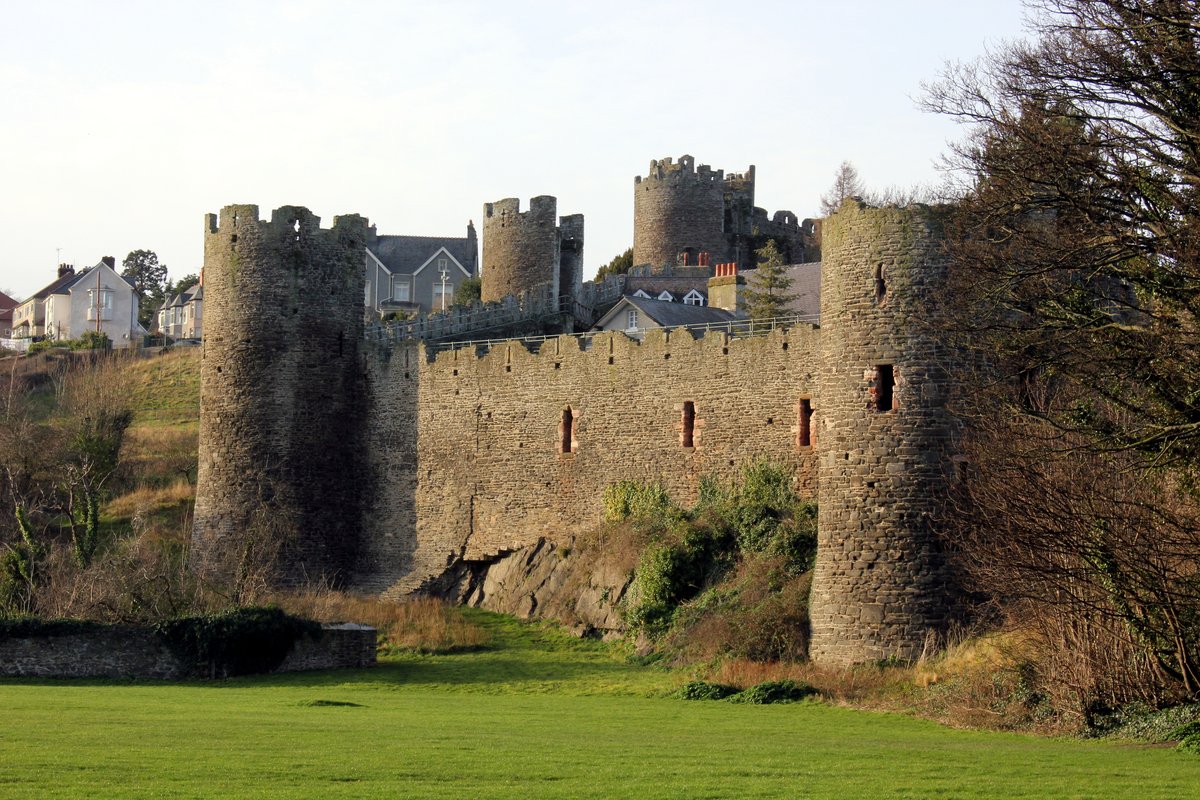
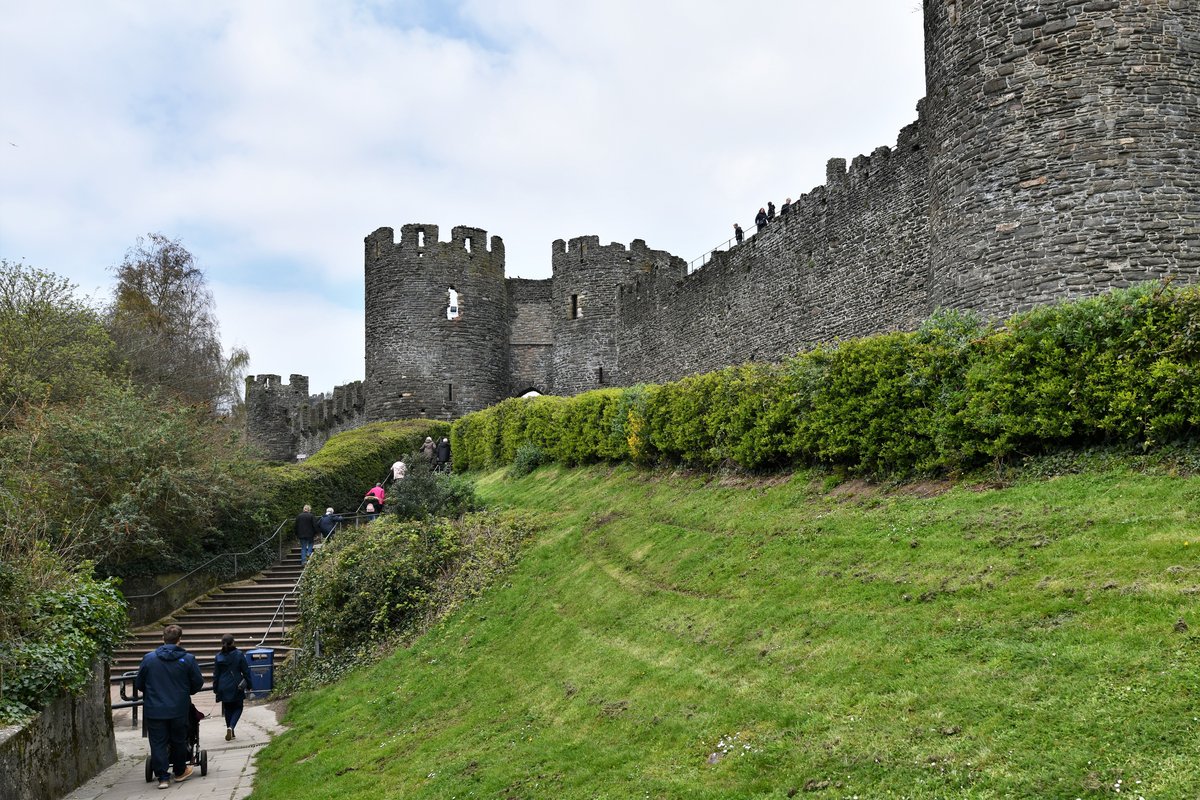
It went up astonishingly fast — begun in 1283 and essentially finished by 1287, four years of frantic work by an army of masons under James of St George. Eight great round towers, each about seventy feet high, are strung in a long line along a rock above the estuary, divided by a cross-wall into an outer and an inner ward. It is a simpler shape than Caernarfon or Harlech — no concentric rings, just a powerful wall of towers following the stone.
But the castle is only half of it. Edward planted an English town beside it and wrapped the whole thing in walls: nearly a mile and a quarter of curtain wall, studded with towers and pierced by gateways, still almost complete today. You can walk most of the circuit. Conwy is one of the finest surviving walled towns in Europe — a piece of the thirteenth century you can still step inside and around.
History caught up with it more than once. Richard II sheltered here in 1399, on the road to losing his crown. Two years into Owain Glyndŵr’s rising, in 1401, two Welshmen — Rhys and Gwilym ap Tudur — took the castle by a trick on Good Friday and held it for three months. For a fortress this strong, it fell more often to cunning than to force.
Six centuries later the castle gained unlikely neighbours. Thomas Telford threw an elegant suspension bridge across the estuary in 1826, its towers built to match the castle’s; Robert Stephenson followed with a tubular railway bridge in 1848, castellated to fit in. Medieval and industrial stand side by side at the water’s edge — and somehow agree.
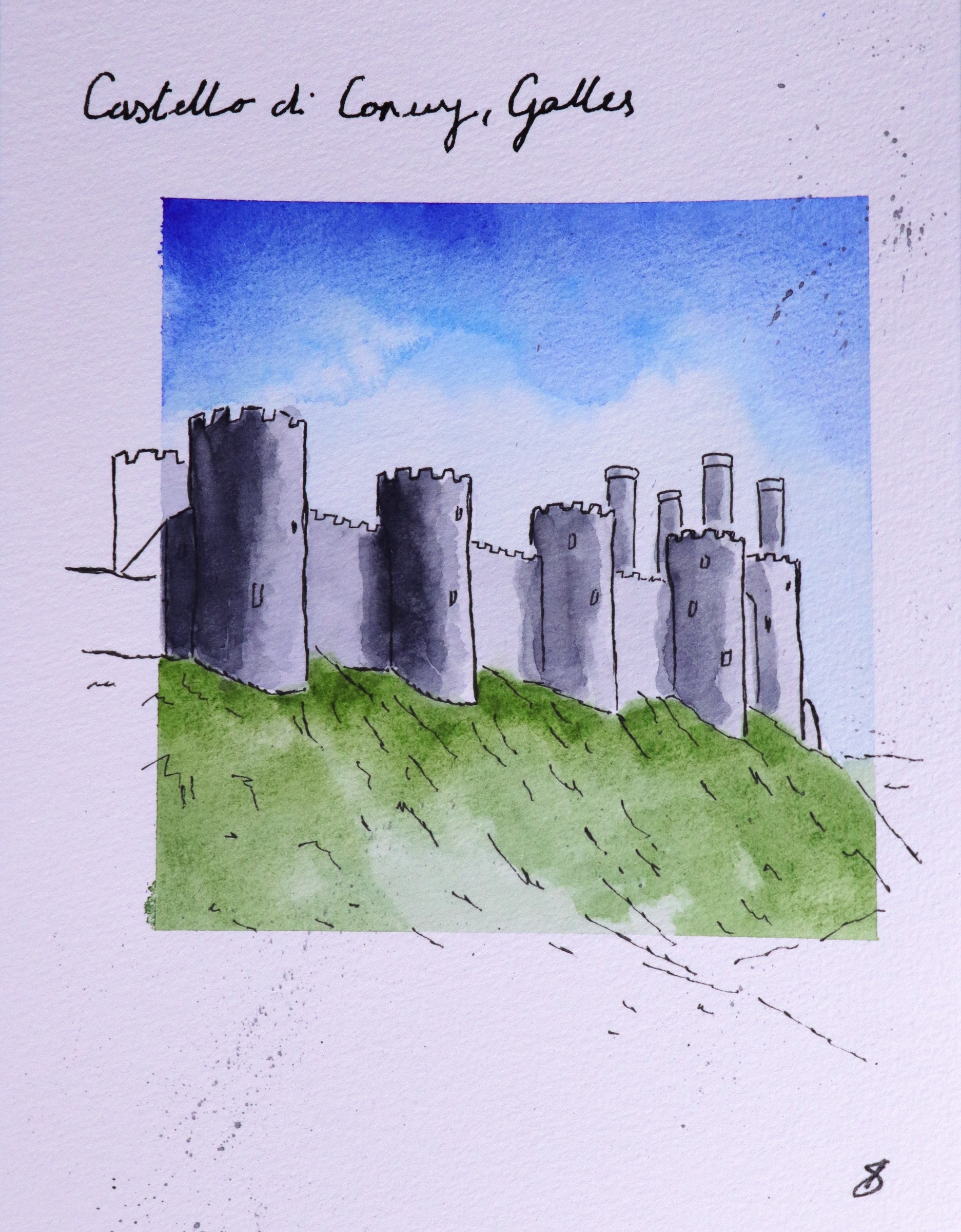
So I drew the whole silhouette: the row of round towers in quick ink, the stone washed cool grey, blue for the sky and the estuary, green at the foot, and a splash of Welsh red at the edge. Conwy belongs — with Harlech and Caernarfon — to the UNESCO listing of Edward’s Welsh castles, but it keeps what the others lost: its town, and its walls, still wrapped around it.
See also · Castles Sketchbook
Caernarfon Castle ·
Harlech Castle ·
Chambord