The subject
About Pienza
Pienza is a small stone town in the Val d’Orcia that a pope built to be perfect.
It began as Corsignano, a modest Tuscan village, and would have stayed one but for its most famous son: Enea Silvio Piccolomini, born here in 1405, who in 1458 became Pope Pius II. Within a year he set out to remake his birthplace as an “ideal city” — and to rename it Pienza, the town of Pius.
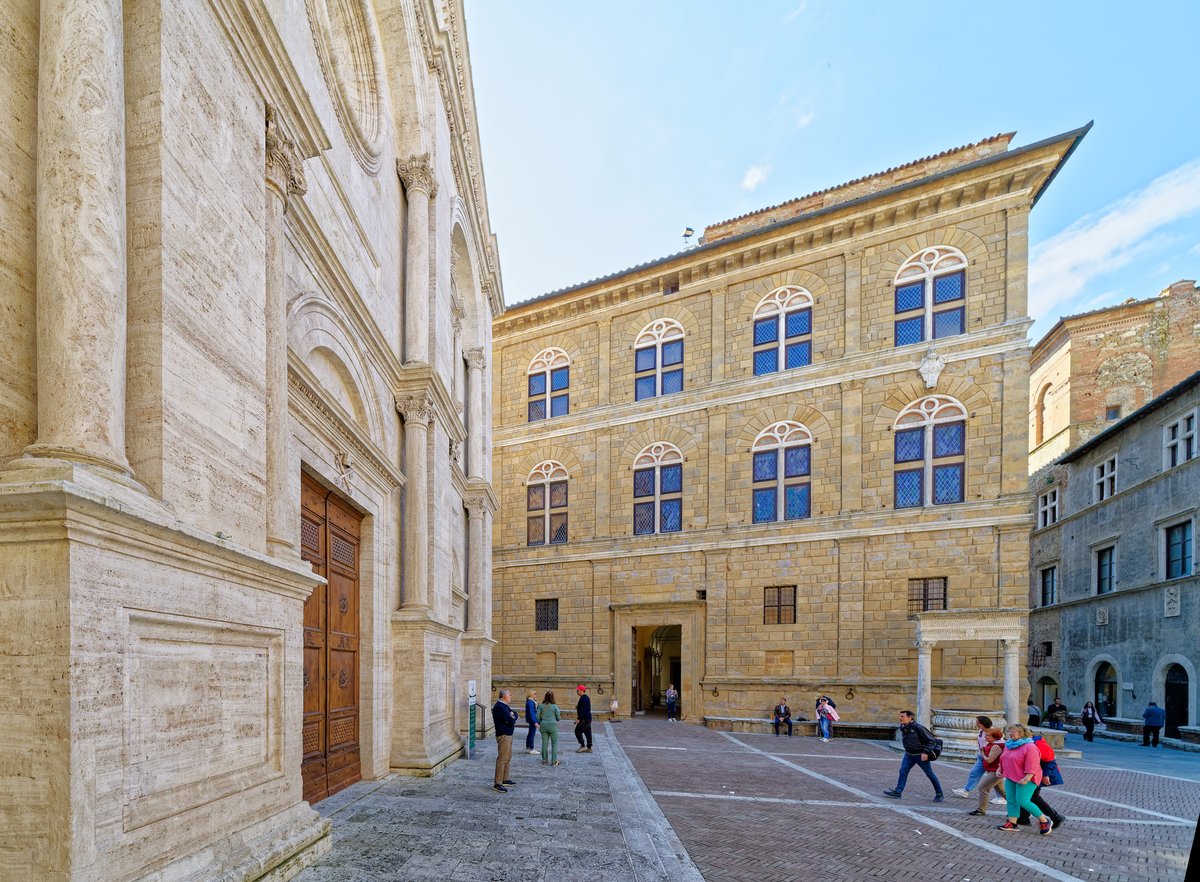
The work was extraordinarily fast. Between about 1459 and 1462 the architect Bernardo Rossellino laid out a new heart for the town around a single trapezoidal square, Piazza Pio II, and set around it the cathedral, the Palazzo Piccolomini with its hanging garden over the valley, the bishop’s palace and the town hall. Pius consecrated the Duomo in 1462. It is usually called the first deliberate work of Renaissance town planning — a whole idea of order raised at once, in warm travertine and local stone.
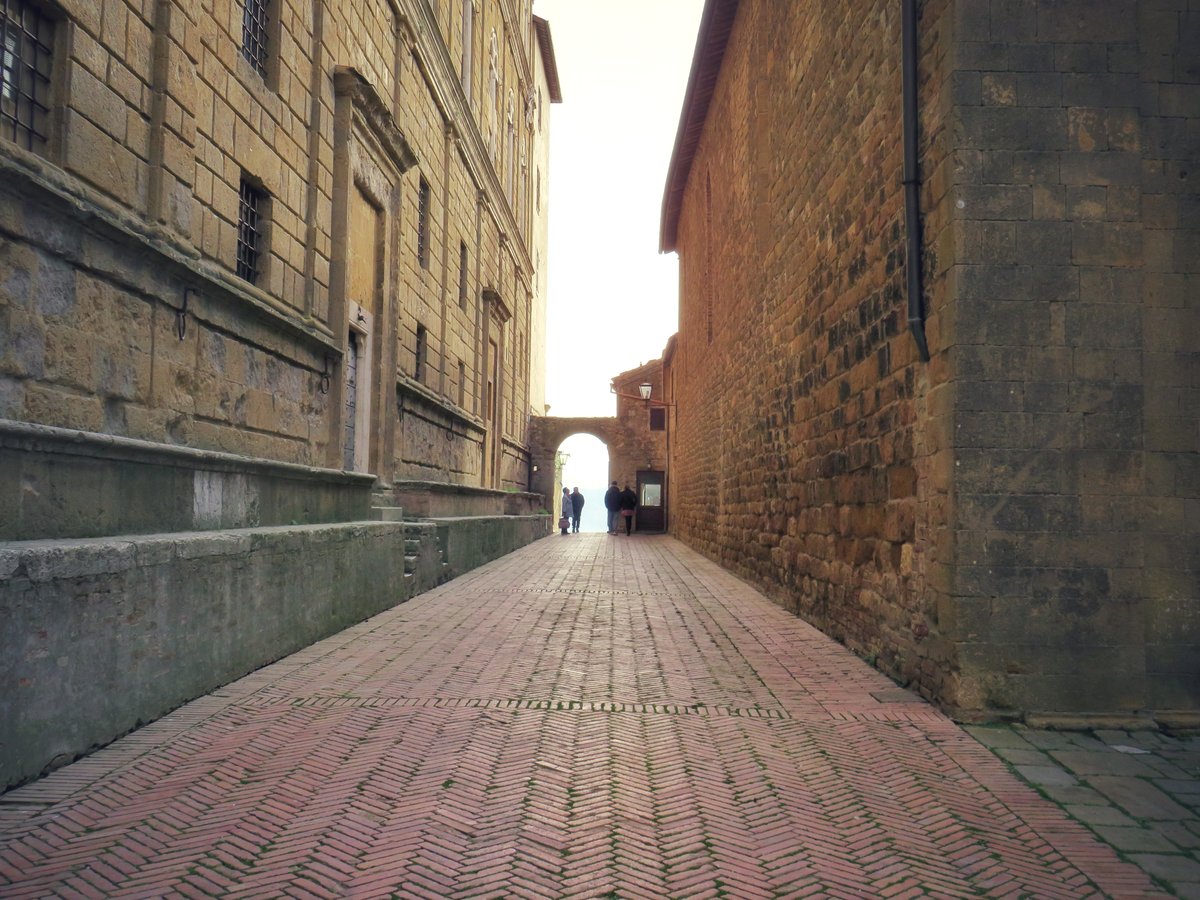
For all its grandeur of intention, Pienza is tiny: a handful of streets you can cross in minutes, famous now for its pecorino cheese and its romantically named lanes — Via dell’Amore, Via del Bacio, Via della Fortuna. In 1996 UNESCO listed the town, and later the whole Val d’Orcia around it, as World Heritage.
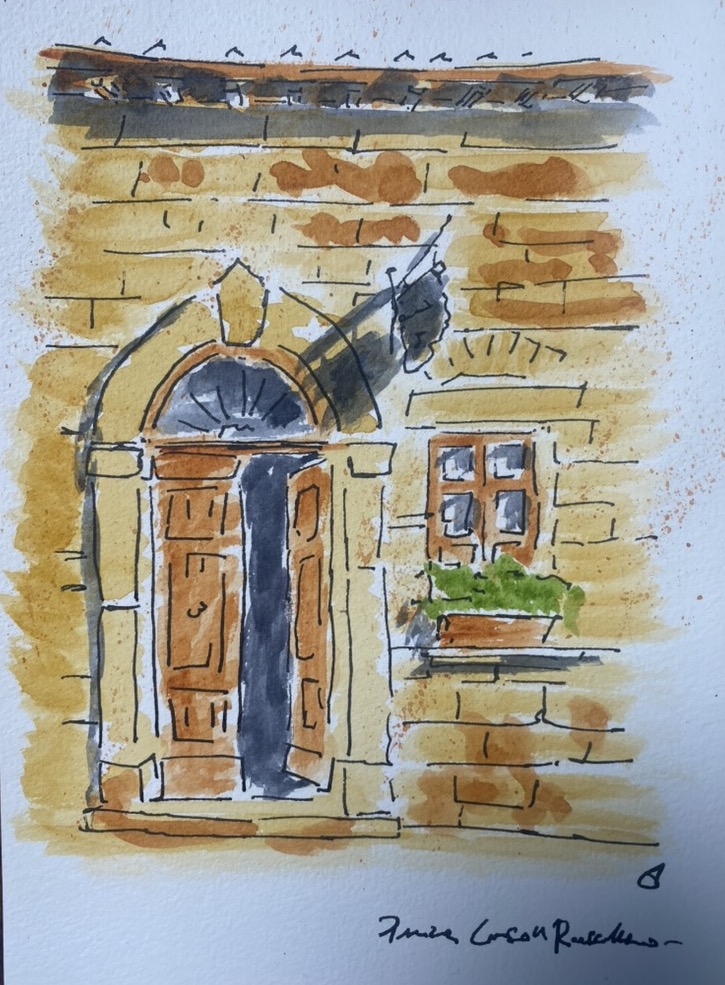
That is the Pienza I carry: not the pope’s plan but the warmth of its stone in the afternoon light. So I drew a single doorway in ink and washed the wall in ochre, with a lantern and a flower box — the intimate town living inside the ideal one.
It is a place made to be looked at, and it rewards looking small: past the perfect square, in the quiet lanes, where the stone glows and someone has set out geraniums.
See also · Tuscan Sketchbook
Pienza Sunlight ·
Il Vicolo dell’Amore ·
Castello di Brolio