The subject
About the Castello di Brolio
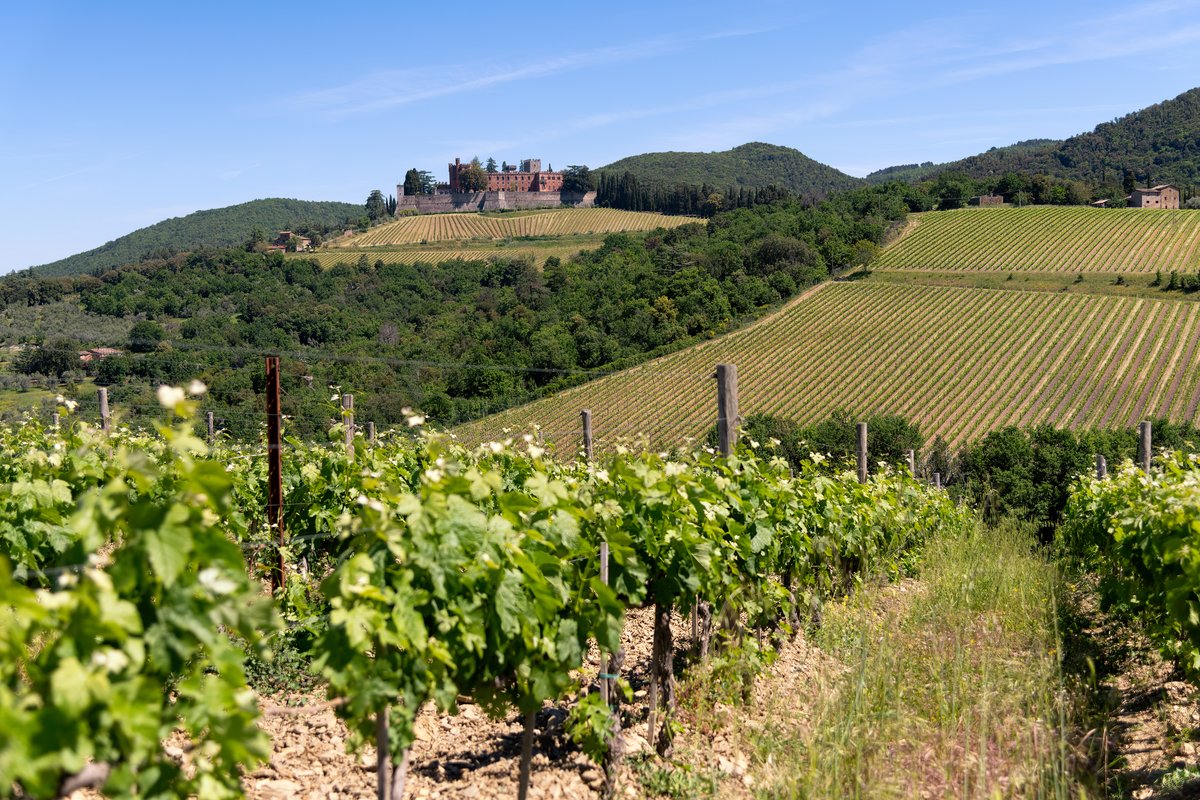
High on a hill above Gaiole in Chianti, its brick towers rising over the vineyards, the Castello di Brolio has belonged to the same family for close to nine hundred years.
The Ricasoli are first documented at Brolio in 1141 and hold it still — one of the oldest wine-making families in the world. For centuries the castle was the last Florentine outpost on the border with Siena, and paid for it: seized by the Sienese in 1252, besieged again and again, and bombarded into partial ruin in 1478.
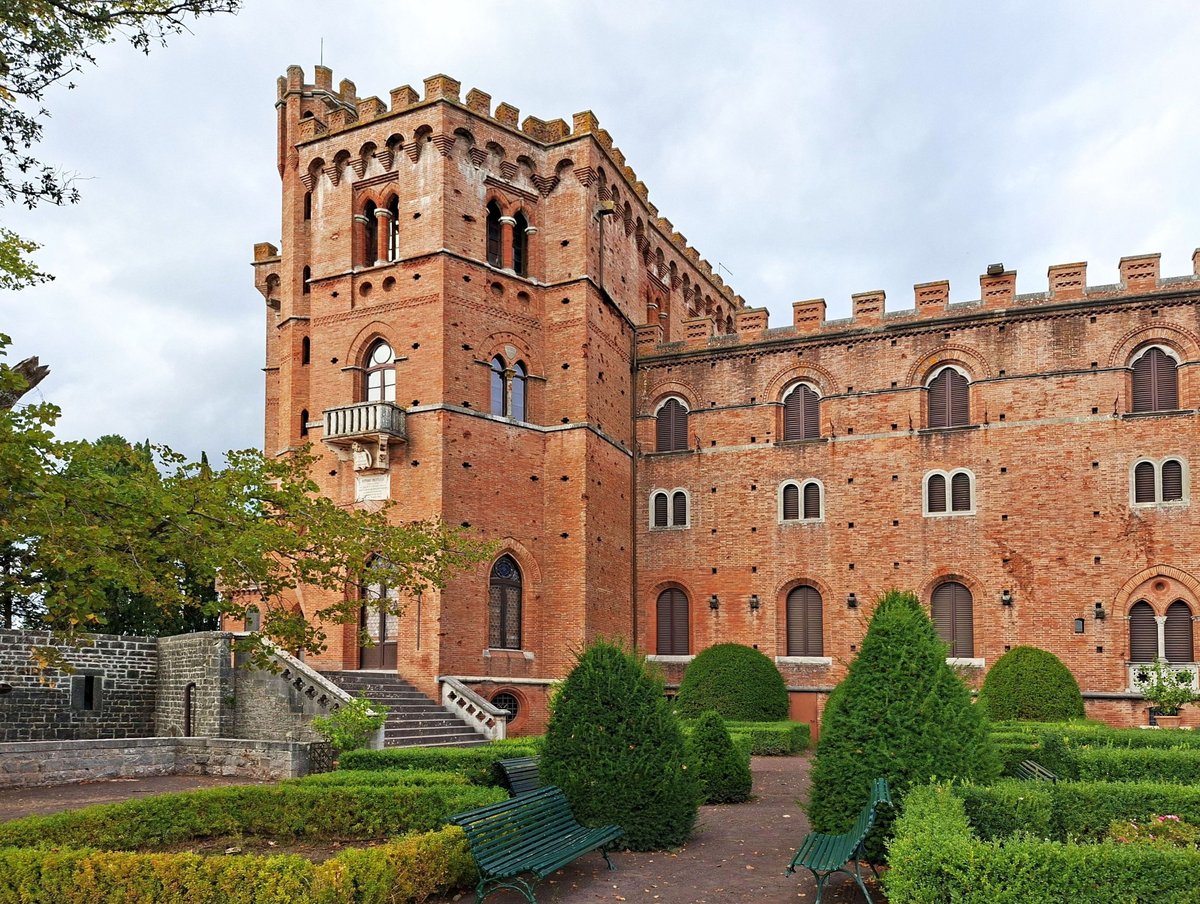
Its present face is younger. In 1835 Baron Bettino Ricasoli had the old fortress rebuilt in a romantic neo-Gothic style, with red brick as the principal material and Tudor windows — the silhouette of crenellated towers that still crowns the hill. The medieval stone walls survive around it; the manor grows out of them.
Bettino Ricasoli was no ordinary landlord. Second prime minister of the new Kingdom of Italy, the “Iron Baron” spent decades experimenting with vines here and, in the 1870s, set down the grape formula for Chianti — a blend built on Sangiovese — that shaped the wine as we know it. Brolio is, in a real sense, where modern Chianti was defined.
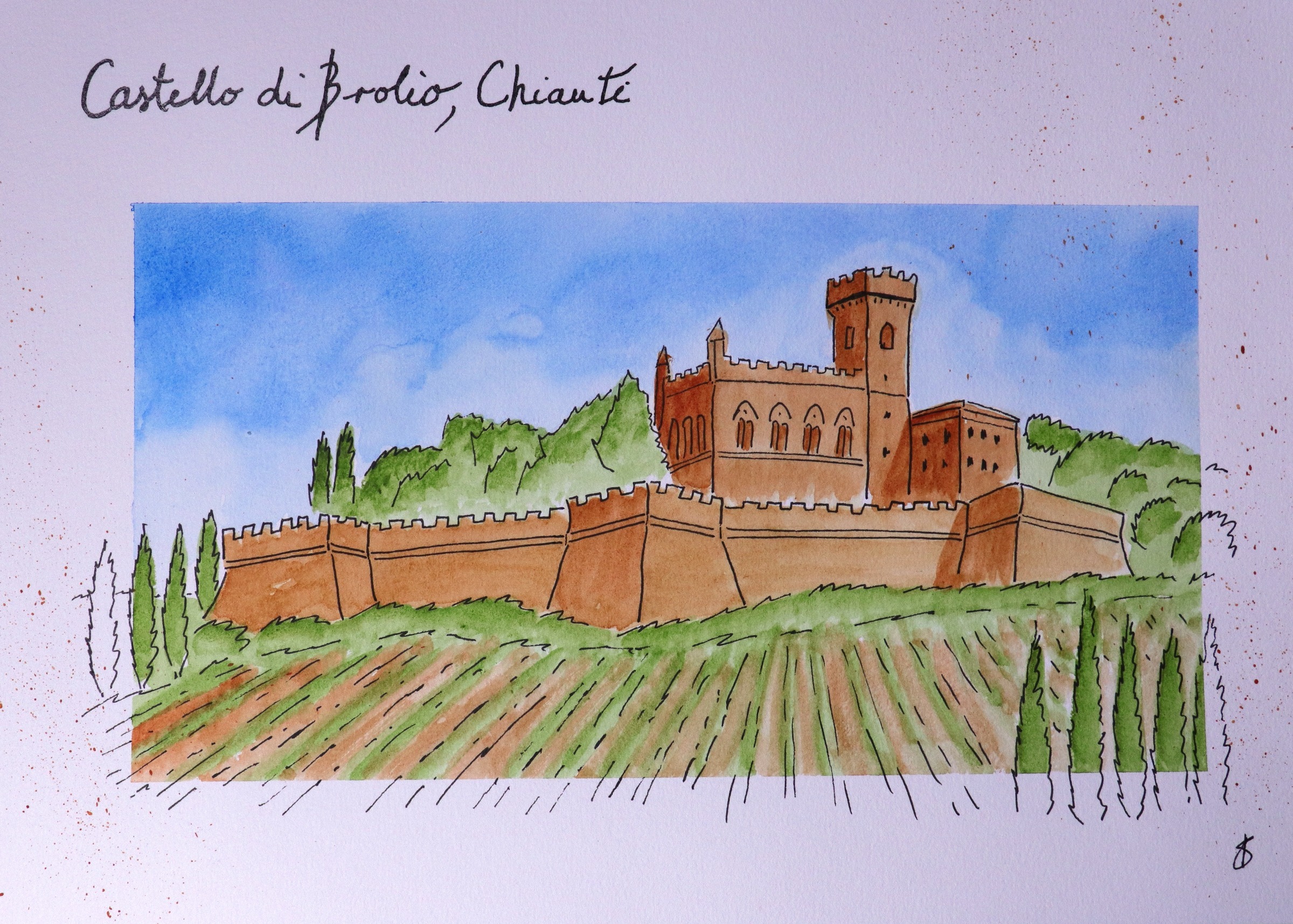
So I painted it as a memory rather than a record: the crenellated towers in quick ink line, a wash of golden ochre for the sky, cypresses at the flanks, and the green rows of the vineyard drawn straight down the page toward you — the Chianti as a feeling of warmth and distance.
The estate still makes wine below those walls, and still belongs to a Ricasoli. Few places wear their history so plainly: a fortress that became a farmhouse, and gave a whole region its wine.
See also · Tuscan Sketchbook
Castello di Meleto ·
Il Vicolo dell’Amore ·
Pienza Sunlight