The subject
About the Castello di Meleto
In the hills of Gaiole in Chianti, ringed by vineyards, the Castello di Meleto has stood guard for the best part of a thousand years.
It is first recorded in the eleventh century as a possession of the monks of the nearby Badia a Coltibuono. In the long wars between Florence and Siena it became one of the principal strongholds of the Gaiole “third” of the Chianti League — a Florentine outpost close to the enemy border. It was besieged more than once: taken by Aragonese and Sienese troops in 1478, retaken by Florence in 1480, and attacked again by imperial forces in 1529.
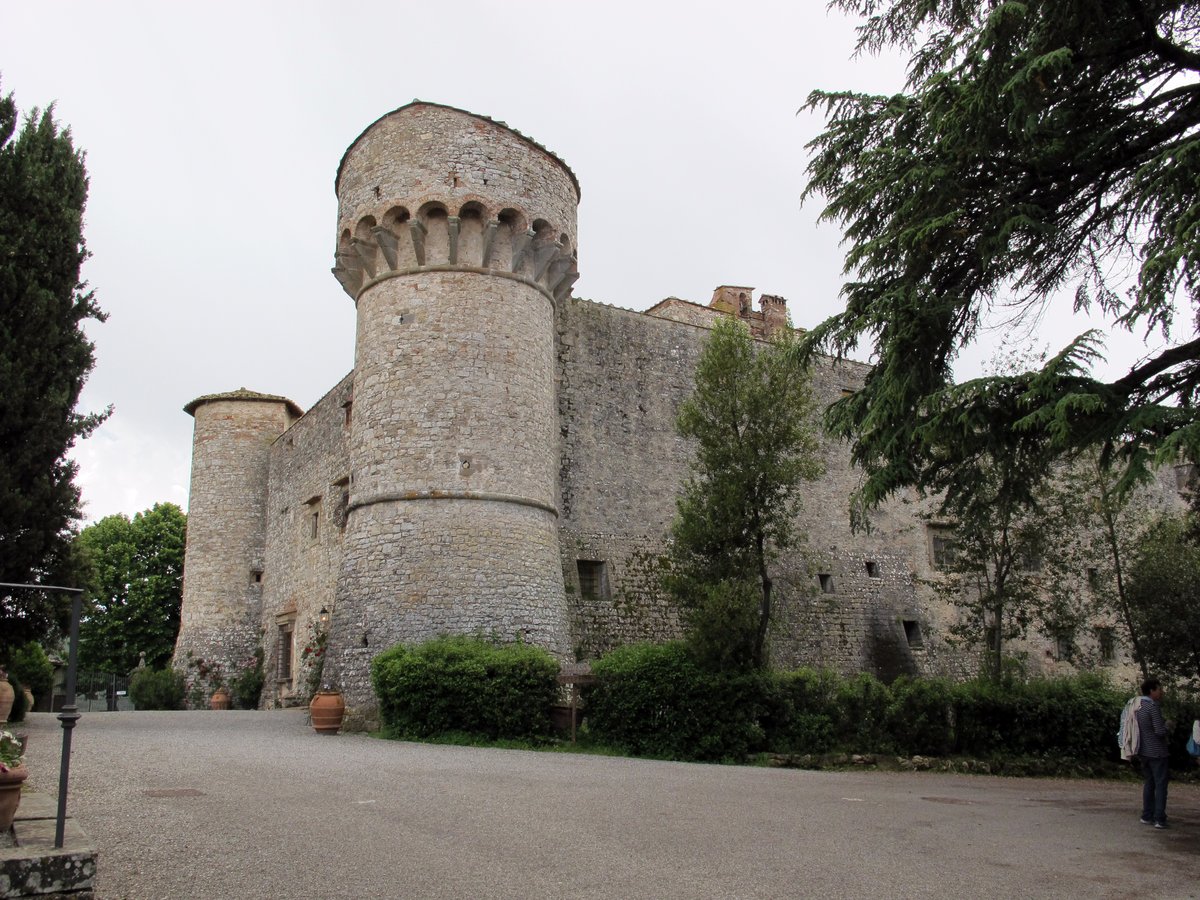
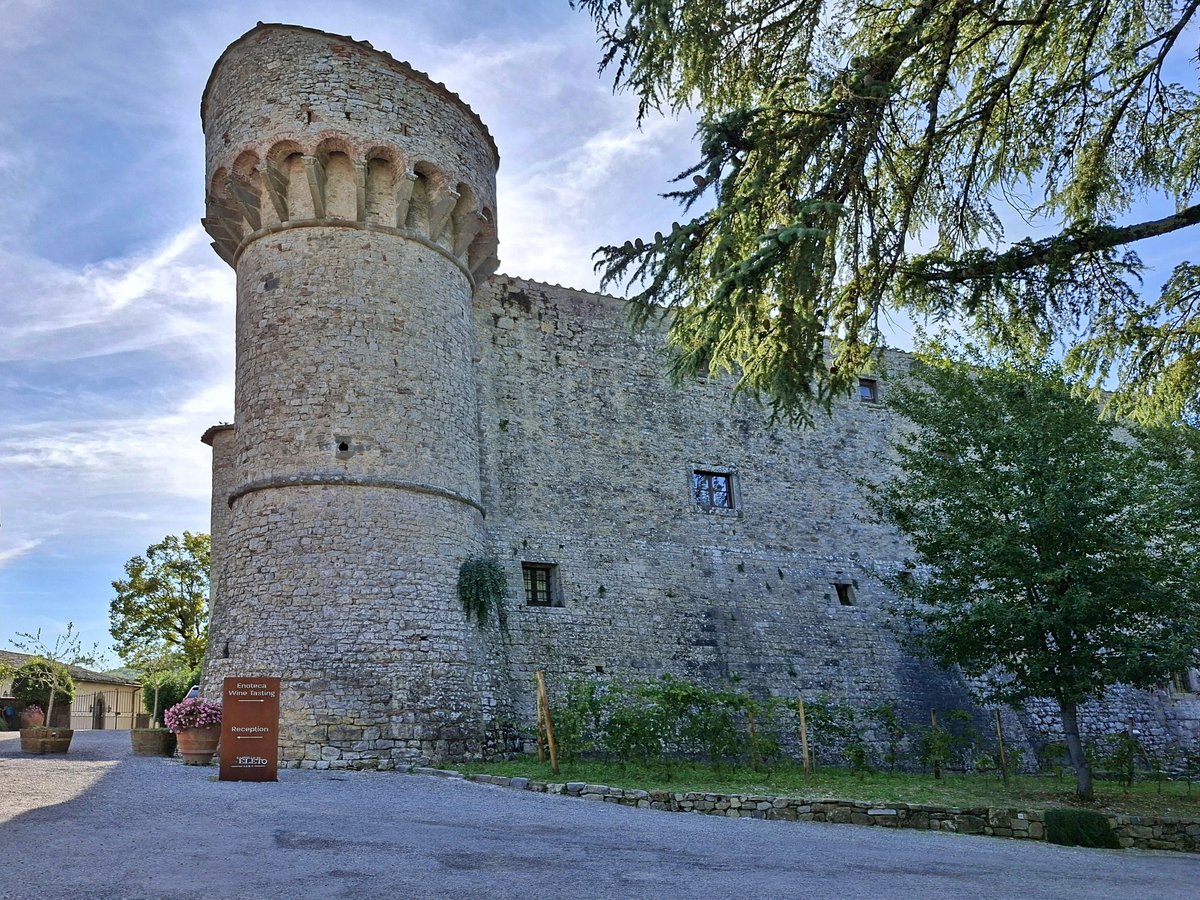
Two great cylindrical towers, added after 1480, still anchor its southern face; their tops flare out on stone corbels that once carried a fighting gallery. Behind the walls the fortress slowly softened into a country villa: once the sieges ended, in the eighteenth century, its rooms were frescoed and furnished and a tiny private theatre was fitted out — its original painted scenery still in place.
Today Meleto is a working wine estate at the heart of Chianti Classico. The vineyards that run down from its walls give the Sangiovese that has been made here for generations, and the castle opens its towers, cellars and little theatre to visitors.
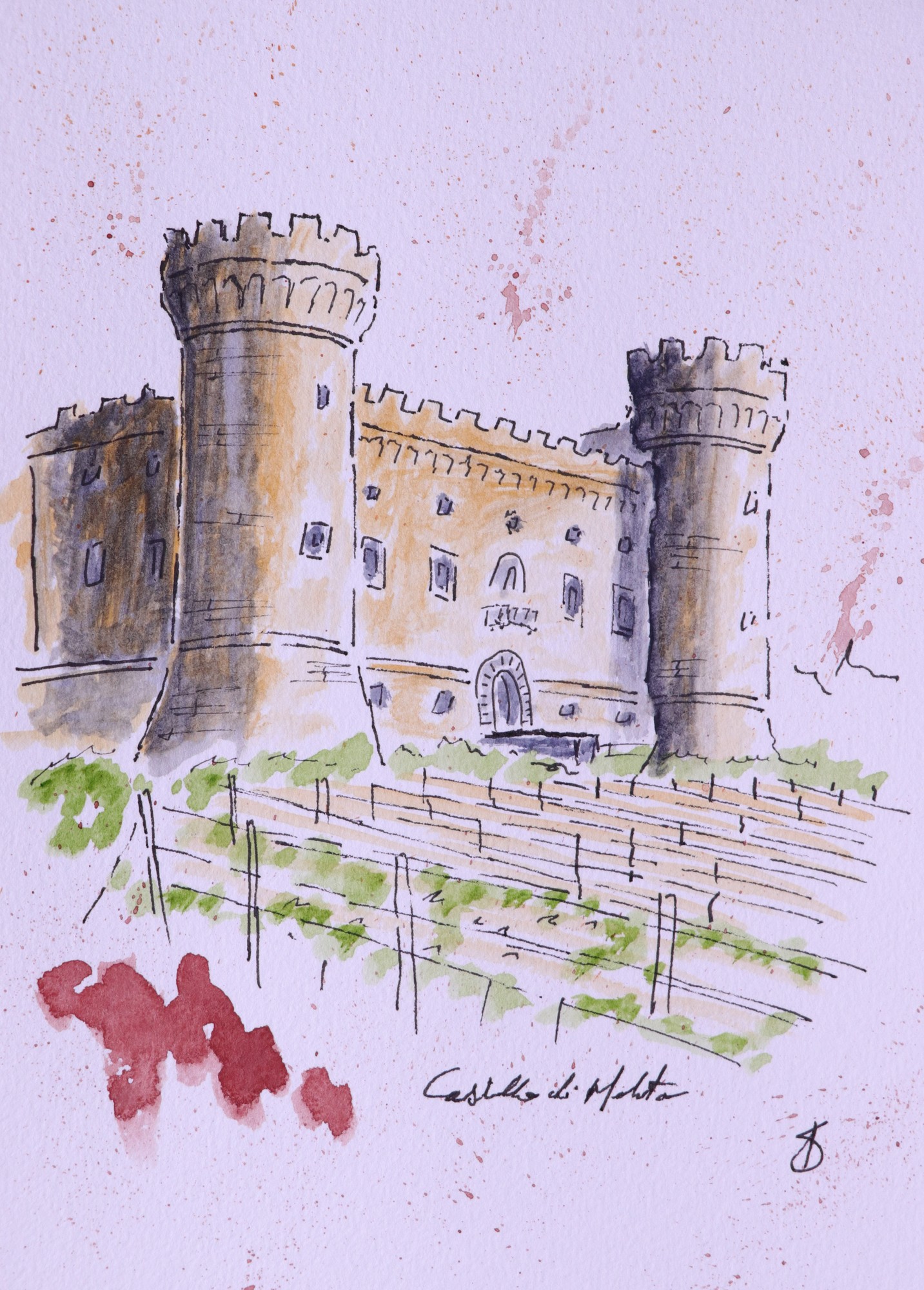
So I sketched it loosely — the round towers and the crenellations caught in ink line — and let the colour run: warm ochre and olive for the walls and the hills, and a bloom of wine-red dropped into the foreground, half vineyard, half Sangiovese, spattered across the paper.
It is the kind of Tuscan castle you come upon almost by accident on a back road in the Chianti — half fortress, half farm — and remember afterwards for the light on its towers.
See also · Tuscan Sketchbook
Castello di Brolio ·
Il Vicolo dell’Amore ·
Pienza Sunlight