The subject
The Arch of Septimius Severus
Where the Roman Forum begins, under the Capitoline Hill, a white marble arch has stood for more than eighteen centuries — a monument to a distant victory, and to a family quarrel that ended in murder.
The arch was dedicated in AD 203 to celebrate the emperor Septimius Severus’ campaigns against the Parthian Empire, Rome’s great rival to the east. In two wars, between 194 and 199, his armies had taken the cities of Nisibis, Seleucia and Ctesiphon and pushed the frontier deep into Mesopotamia. The arch was Rome’s way of turning that far-off war into stone at the very centre of the city.
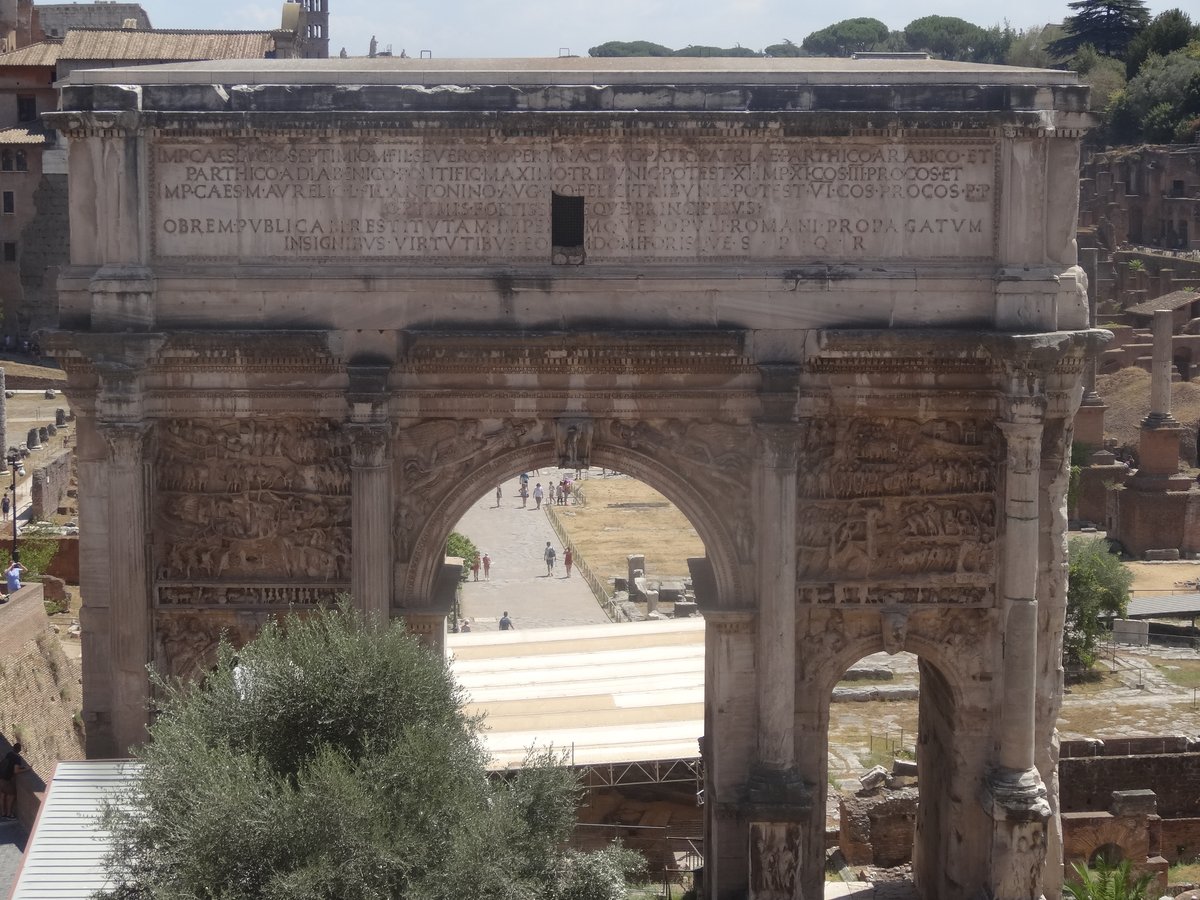
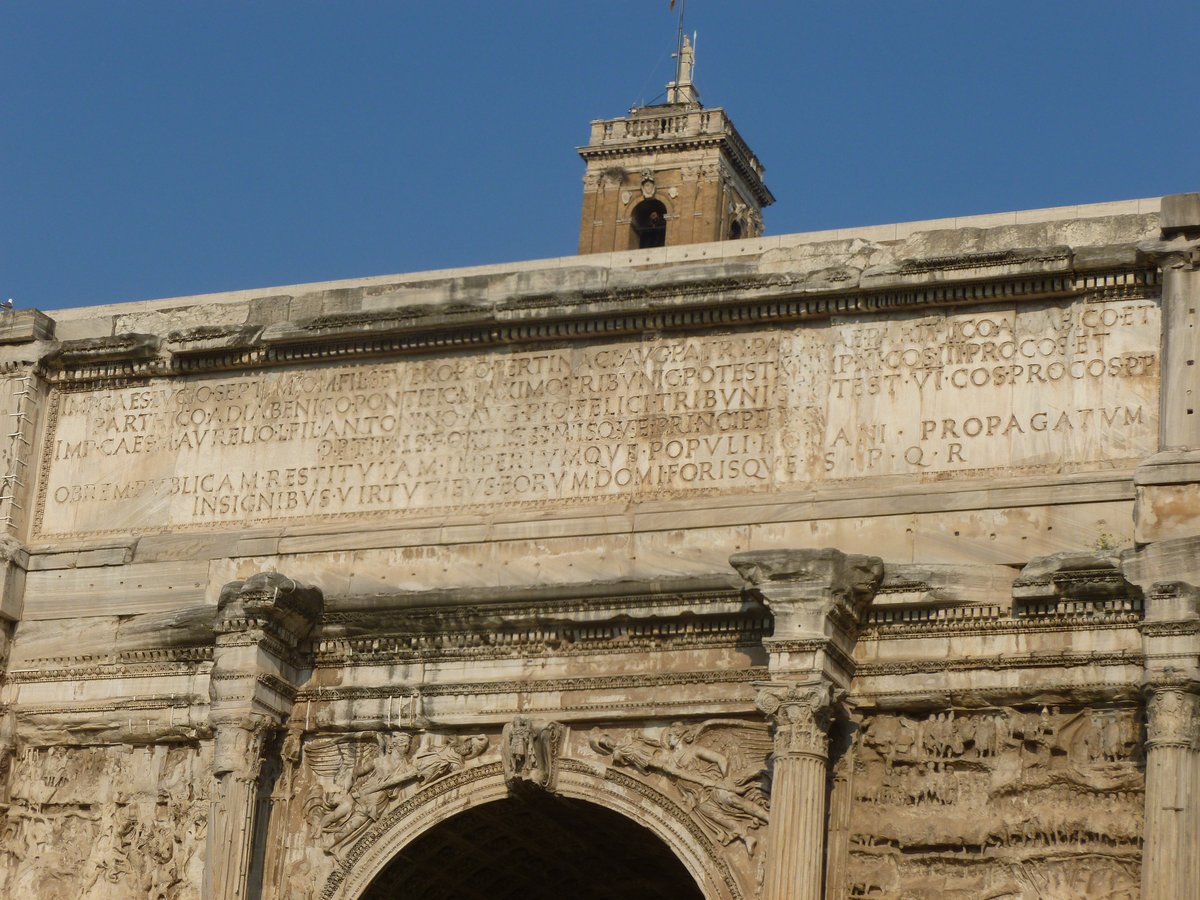
It is a triple arch — one tall central passage between two smaller ones — some twenty-three metres high, built of brick and travertine and faced in white marble. Four great relief panels, one above each side arch, unfold the Parthian campaigns like a strip carved in stone: sieges, surrenders, walled cities stormed, the army on the march. Worn smooth now, they were once painted and gilded, bright against the sky.
High on the attic runs the dedication, once spelled out in gilded bronze letters — and its fourth line does not quite fit. When Septimius Severus died in 211, his sons Caracalla and Geta were meant to rule together; within a year Caracalla had Geta murdered and his memory condemned. Geta’s name was chiselled from the arch and recut with hollow praise of the survivors. The damnatio memoriae, the condemnation of memory, is still legible here as an absence — a scar in the marble.
The arch owes its survival to an accident of faith. Through the Middle Ages the Forum silted up and its lower half was buried; by the eighteenth century only the upper storey stood clear. What spared it from being quarried for stone was that part of it had passed to a church — sacred ground was not pulled down. Dug back to its foundations, it stands today almost whole.
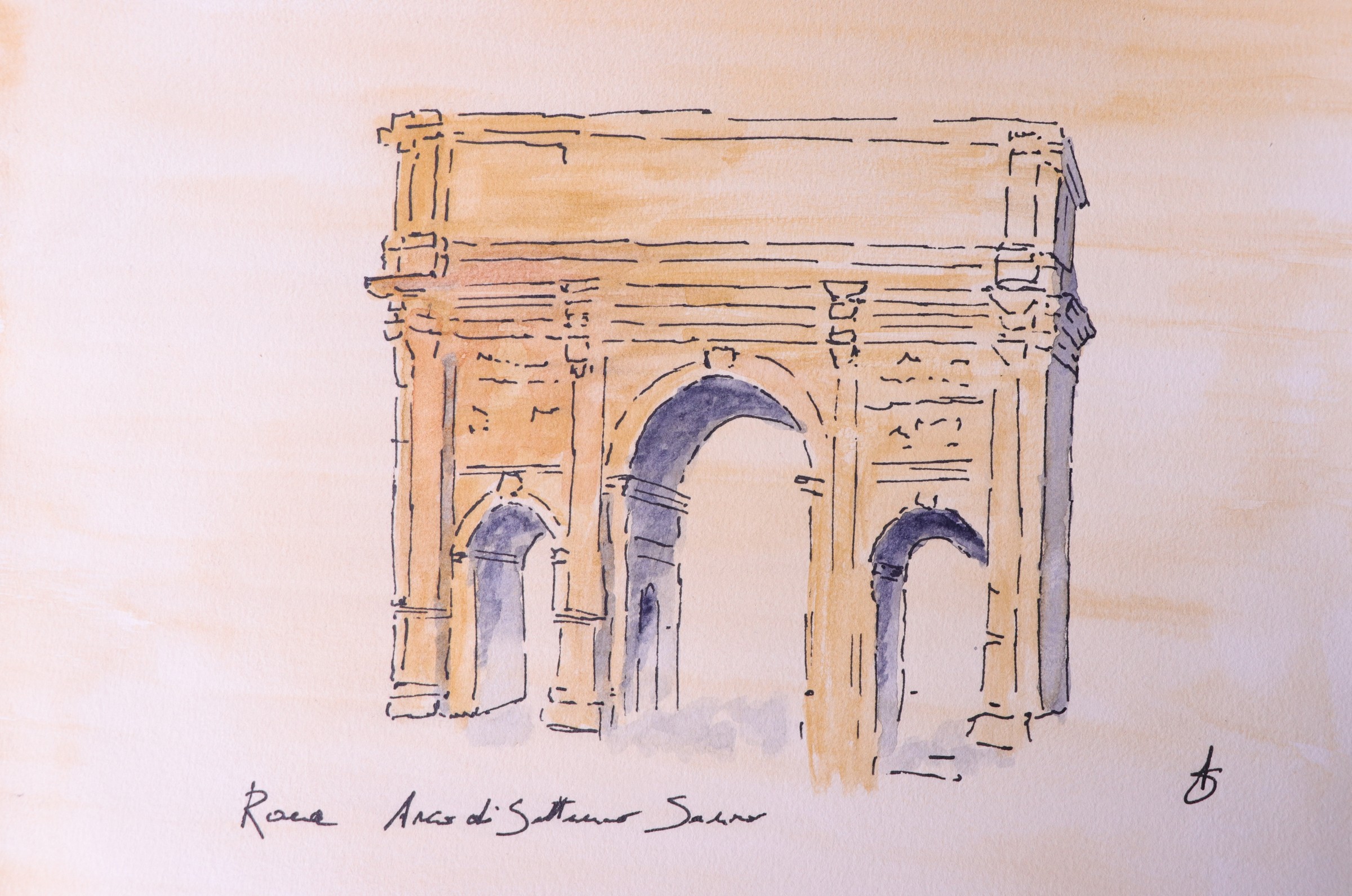
My sketch keeps to the essentials: the three arches in shadow, the warm ochre of old marble, the pen tracing cornices and worn edges — a small A4 page for a monument that has outlasted the empire that raised it.
See also · Architectural
Arch of Constantine ·
Brunelleschi’s Dome