Architectural · 2026
My last visit to Rome, standing before the Arch of Constantine — the sensations I felt facing this architectural marvel.
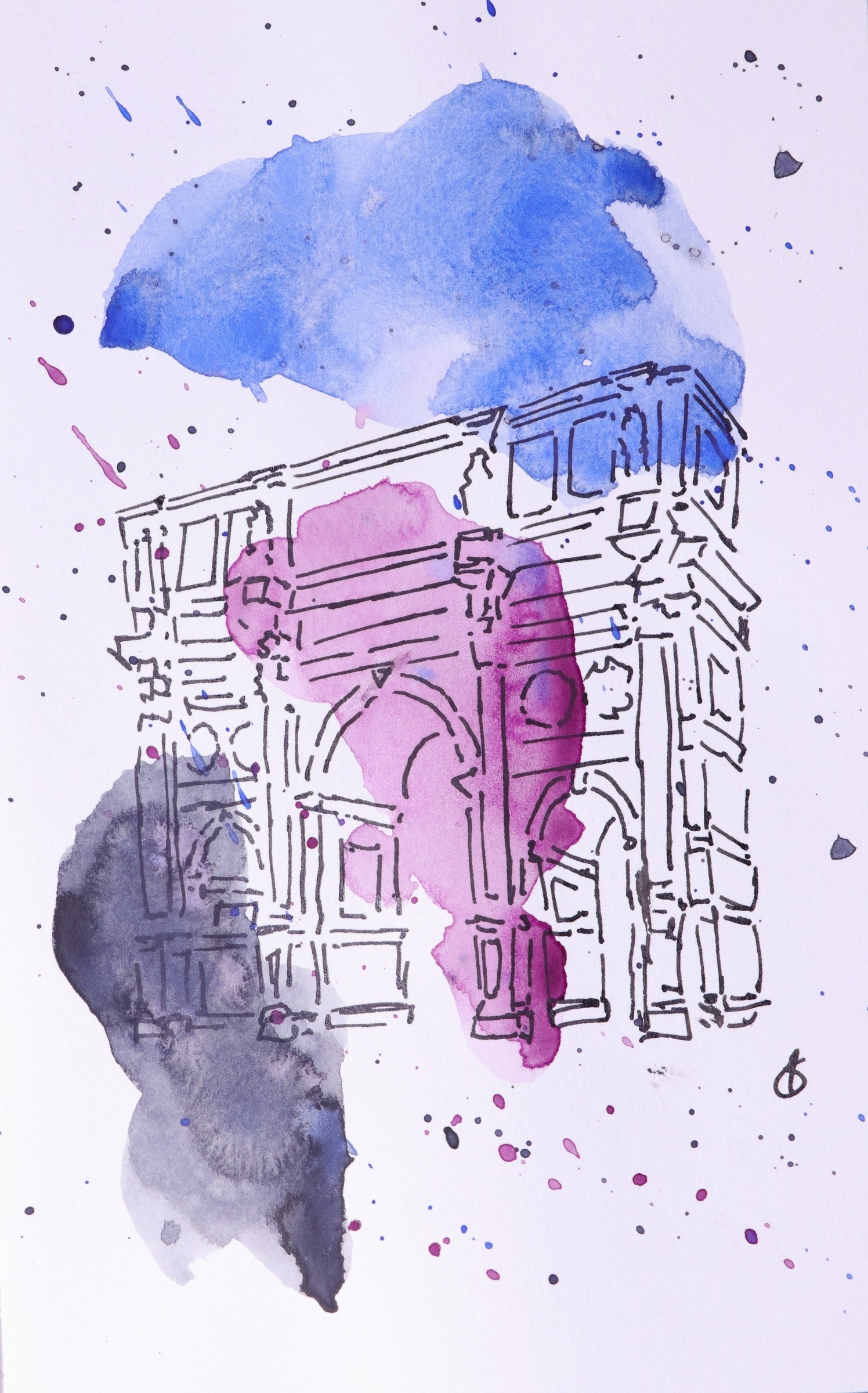
This piece is part of my collection. Originals will soon be available to buy online — write to me in the meantime.
The subject
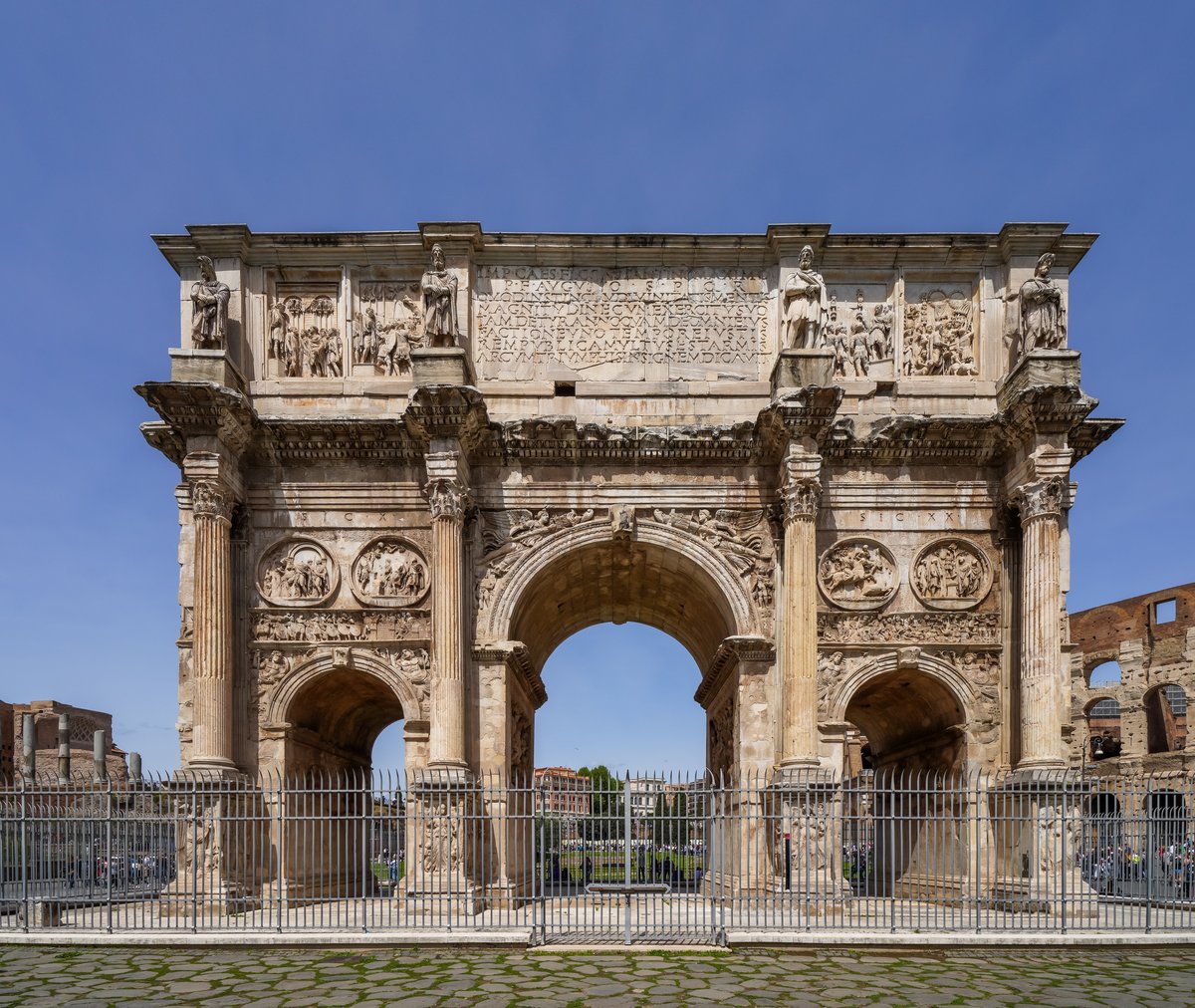
Beside the Colosseum, straddling the ancient triumphal road into Rome, stands the Arch of Constantine — the largest and best-preserved of the city’s triumphal arches.
It was raised by the Senate in AD 315 to celebrate the emperor Constantine’s victory over Maxentius at the Battle of the Milvian Bridge three years earlier. The dedication credits the win to instinctu divinitatis — “by the prompting of the divinity” — a carefully vague phrase for the moment when Rome began to turn from its old gods toward Christianity.
The arch is vast: about twenty-one metres high and twenty-five wide, pierced by three passages — a tall central archway flanked by two smaller ones. Eight Corinthian columns of yellow Numidian marble stand against its face, and once carried statues of Dacian prisoners on the attic above.
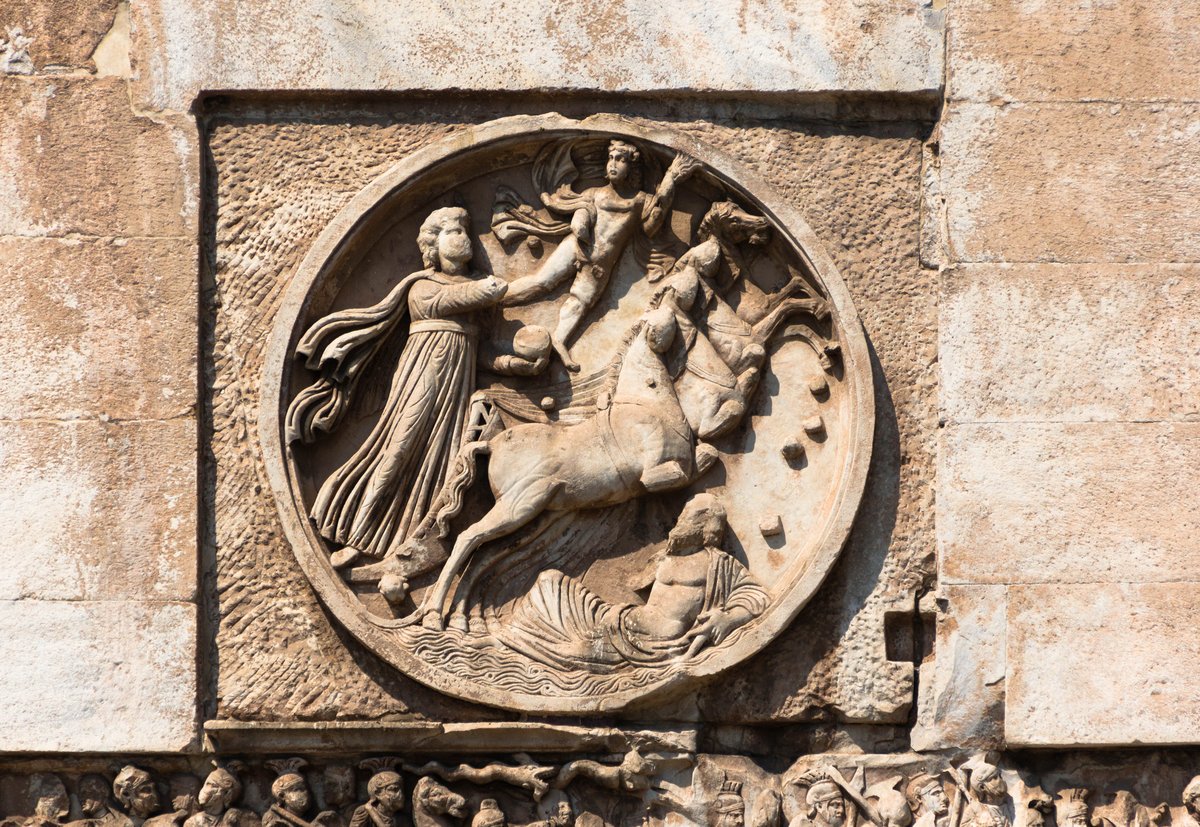
What makes it strange and wonderful is that much of its sculpture is borrowed. Reliefs and roundels were taken from earlier monuments to Trajan, Hadrian and Marcus Aurelius and set alongside newer, blockier Constantinian friezes. Art historians read this patchwork as the hinge between classical Rome and the late-antique world — two centuries of sculpture on a single façade.
I didn’t want to survey the stone. I wanted the feeling of standing under it — the weight, the light, the noise of the piazza.
So I drew it as a sensation. The architecture is there in loose fountain-pen line — the arches, the columns, the crowded reliefs — but the colour breaks free of it: washes of cobalt, magenta and grey thrown across the page, splattered and bled, the way a place strikes you before you have had time to describe it.
For all its reused parts, the arch became the template that later empires copied — from the Arc de Triomphe in Paris to countless victory gates the world over. It still stands where it always has, a few steps from the Colosseum, catching the Roman light.
See also · Architectural Sketchbook Arch of Septimius Severus · Brunelleschi’s Dome · Florence Cathedral Sensation